Categories
LICs LICs

Plato Income Maximiser Limited raises $139.5m

Plato Income is Financial Industry with sub- industry is Asset Management. Market Capitalization is 657.126m. Their 5 years Monthly Beta is 0.78. 

Plato Income’s NTA values shows below are before the dividend of $0.005 per share payable on 31 December 2021. The ex-date of the dividend is 16th December 2021. 

Plato Income Maximiser limited Pre – Tax NTA $1.101 while Post – tax NTA is 1.105. Per – tax NTA Includes tax on realised gains/losses and other earnings but excludes any provision from tax on unrealised gains/losses. Post – Tax NTA includes tax on realised and unrealised gains/losses and other earnings. 

During November, PL8 raised $139.5m in total through a Placement to wholesale investors and a Share Purchase Plan (SPP). The Placement to wholesale investors raised $71.3m with the issue of 64.3m fully paid ordinary shares at $1.11 per share. 

The SPP raised $68.2m through the issue of 62m new shares at $1.10 per share. The SPP was oversubscribed with the Company targeting $50m, however the Company decided not to scale back any applications.

The proceeds from the Placement and the SPP will be invested via the Plato Australian Shares Income Fund in accordance with the Company’s structure and investment strategy.

PL8 took the opportunity to raise capital when the Company was trading at a premium. The share price closed at $1.285 on 2 November, the day prior to the capital raising announcement, an 11.7% premium to the pre-tax NTA and a 15% premium to the post-tax NTA. 

The issue of new shares through the Placement and SPP has seen the share price decline to be trading closer to the pre-tax NTA at November-end.

Portfolio Performance as at 30th November 2021

PORTFOLIO PERFORMANCE¹1M%3M%1YR% P.A.3YRS% P.A.INCEPTION% P.A.
Total return²-0.7-2.114.813.59.6
Income³0.61.66.08.37.4
Bench. total return²-0.4-2.017.014.010.1
Excess total return²-0.3-0.1-2.2-0.5-0.5
Excess Income³0.0-0.11.13.42.2
Excess franking³0.00.00.51.20.9

Company Profile 

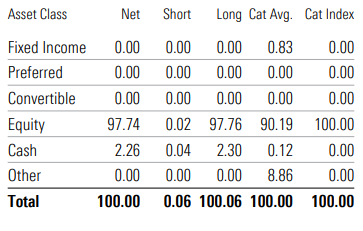
Plato Income Maximiser Limited is a listed investment company incorporated in Australia. The Company has been established to provide investors with the opportunity to benefit from an investment in an actively managed, well-diversified portfolio of Australian listed equities by investing in an the unlisted scheme Plato Australian Shares Income Fund.

(Source: BanyanTree)

General Advice Warning

Any advice/ information provided is general in nature only and does not take into account the personal financial situation, objectives or needs of any particular person.

Categories
LICs LICs

Twilio’s Software Building Blocks Are Constructing a Cloud Communications Empire

Business Strategy and Outlook

Twilio is a cloud-based communication-platform-as-a-service, or CPaaS, company offering communication application programming interfaces, or APIs, and prebuilt solution applications aimed at improving customer engagement. Through these APIs, Twilio’s platform allows developers to integrate messaging, voice, and video functionality into business applications. In a go-to-market model that focuses on empowering developers to utilize the APIs to build products in a highly customized fashion, Twilio has been able to expand into use-cases that would be difficult to penetrate otherwise. For widely sought after use-cases, Twilio has developed solution applications, like Flex Contact Center, which combine various channel APIs into a unified interface to create use-case-specific solutions.

The communication channel APIs are deployed through the Programmable Communications Cloud and then are combined and expanded into application platforms in the Engagement Cloud to offer higher level functionality for specific use-cases. In this view full stack as best-in-breed in the CPaaS space, enabling deeply integrated, sticky communication solutions. Twilio has stellar customer metrics, with churn consistently below 5% and net dollar expansion in excess of 130% in recent years.

Financial Strength

Twilio is in a healthy financial position. Revenue is growing rapidly, and the company is beginning to scale, while the balance sheet is in good shape. As of September 2021, the company had cash and short-term investments of $5.4 billion and a debt balance of $985.5 million. In March 2021, Twilio issued $1.0 billion of senior notes, consisting of $500 million of 3.625% notes due 2029, and $500 million of 3.875% notes due 2031. In June 2021, the company redeemed its prior convertible notes, due March 2023, in their entirety. Since raising approximately $150 million in its IPO in 2016, Twilio has completed several secondary offerings, recently announcing a $1.8 billion offering of its Class A common stock in 2021. Twilio has yet to achieve GAAP profitability, as the company remains focused on reinvesting excess returns back into the company, both on an organic and inorganic basis, to build out the platform and enhance future growth prospects.

Our fair value estimate for Twilio is $356 per share, down from $388 as we model slightly more muted long-term growth. It is expected that Twilio to grow at a 38% CAGR through 2025 from the combination of an expanding customer base and increasing usage of the platform by existing customers, evidenced by a stellar 131% net dollar expansion rate in the third quarter. Investors are discouraged by the combination of the third-quarter slowdown in organic growth, which we still view as healthy at a 38% increase year over year, and the widening loss expected for full-year 2021 after management’s fourth-quarter guidance.

Bulls Say’s 

  • The addition of SI partnerships and solution APIs should lead to increasing success in winning enterprise customers, which not only offer a greater lifetime value for a proportionally smaller acquisition cost, but also tend to be stickier customers. 
  • Twilio has stellar user retention metrics, with churn consistently below 5% and net dollar retention north of 130% in recent years. 
  • As Twilio focuses on developing more solution APIs and growth shifts from usage-based messaging to SaaS-like priced solutions, there should be a natural uptick in both gross margins and recurring revenue.

Company Profile 

Twilio is a cloud-based communication platform-as-a-service company offering communication application programming interfaces, or APIs, and prebuilt solution applications aimed at improving customer engagement. Through these APIs, Twilio’s platform allows software developers to integrate messaging, voice, and video functionality into new or existing business applications. The company leverages its Super Network, Twilio’s global network of carrier relationships, to facilitate high speed cost-optimized global messaging and voice-based communications.

(Source: FN Arena)

General Advice Warning

Any advice/ information provided is general in nature only and does not take into account the personal financial situation, objectives or needs of any particular person.

Categories
Technology Stocks

Accenture Posts Stellar Results as Compressed Transformations Accelerate Demand; Raising FVE to $258

Business Strategy and Outlook

Accenture is one of the largest IT-services companies in the world, providing both consulting and outsourcing capabilities. It is expected that Accenture’s growth will remain at a healthy and gradual pace, rather than a massive uptick. 

As a consultant, Accenture provides solutions for specific enterprise problems as well as broad-scope strategies in addition to integrating software for more than 75% of the global top 500 companies. As an outsourcer, Accenture offers business process outsourcing like procurement services as well as application management. 

As per the opinion of Morningstar analyst, there is always something new in the realm of enterprise technology to keep Accenture relevant and engaged with its most important customers. It’s wide moat stems from intangible assets associated with a stellar reputation for reliability and strategic and technological know-how, especially with large, risk-averse enterprise customers. It is also believed that  Accenture benefits from high customer switching costs as its key customers are loath to switch service providers for large or ongoing contracts. Further, as per Morningstar analyst Accenture generates industry-leading returns on capital because of its scale, given that there are only so many blueprints and software partners that an IT-services company needs to solve enterprise problems. Plus, with Accenture having one of the largest IT workforces (at half a million) and an industry-leading number of diamond accounts (typically $100 million annually or more), smaller IT-services companies may find it hard to keep up with the increasing innovation and know-how required to service enterprise technology.

Accenture Posts Stellar Results as Compressed Transformations Accelerate Demand; Raising FVE to $258

Wide-moat Accenture reported excellent first-quarter results, with the top and bottom line exceeding both management’s and our expectations. Accenture experienced broad-based growth in the quarter, benefiting from accelerating digital transformations throughout all end markets. Outperformance was industry, geography, and deal-size agnostic–reflective of the tremendous demand environment Accenture is experiencing. It is  believed that Accenture is uniquely positioned to address compressed transformation, a demand phenomenon that reflects enterprises requiring all-comprehensive digital and cloud transformations in a faster time span. This broad-market trend toward clients taking on more change at once will accelerate and continue to build an impressive pipeline. On the back of increasing alignment of Accenture’s end markets with its business transformation backed value proposition, Morningstar analysts increased our fair value estimate to $258 per share from $236. 

Financial Strength

Accenture’s financial model requires very little debt and generates significant cash flow. The company has an extremely low debt/capital ratio of 0.3% and produced slightly over $3 billion in free cash flow in fiscal 2021. Morningstar analysts are confident that it will be able to deliver on significant share repurchases, dividend expansion, and acquisitions going forward, as it is expected that free cash flow to the firm will expand to over $8 billion by fiscal 2026. Most important is Accenture’s returns on new invested capital. While Accenture has similar operating margins to peers like Cognizant and Capgemini, it is able to achieve much greater returns on new invested capital than its peers because of its size, as per Morningstar analyst. This is possible in the industry because most major consulting/IT-services companies need the same partnerships with major software companies and all need blueprints to solve common enterprise problems. 

Bull Says

  • Accenture will increase wallet share with its enterprise customers as the technology landscape becomes increasingly complex. 
  • Accenture will rely more on automation to handle some of its business process outsourcing, allowing for margin expansion. 
  • Accenture’s mix shift away from more commoditized offerings should boost profitability.

Company Profile

Accenture is a leading global IT-services firm that provides consulting, strategy, and technology and operational services. These services run the gamut from aiding enterprises with digital transformation to procurement services to software system integration. The company provides its IT offerings to a variety of sectors, including communications, media and technology, financial services, health and public services, consumer products, and resources. Accenture employs just under 500,000 people throughout 200 cities in 51 countries.

(Source: Morningstar)

General Advice Warning

Any advice/ information provided is general in nature only and does not take into account the personal financial situation, objectives or needs of any particular person.

Categories
Funds Funds

JP Morgan Investment Funds: A collection of top picks from diversified industries

He also tends to add and trim positions aggressively as they become more or less attractive according to analyst models, a tendency that benefits when stock prices mean revert. While Davis’ artful approach has some appeal, it doesn’t have a discernible edge relative to its competition.

Portfolio:

This portfolio finds a balance between differentiation and careful risk management. It held 51 stocks at the end of September 2021, significantly less than the 140-180 it used to have when it had three independently managed sleeves. However, manager Scott Davis’ desire to let stock selection drive results leads to only modest sector and industry tilts relative to its S&P 500 benchmark. Davis also considers factor exposure when building the portfolio. For instance, he increased the portfolio’s stake in financials companies toward the end of 2020 to bolster its exposure to cheaper, more cyclical stocks to help offset its lack of exposure to the energy sector.

The portfolio has historically leaned a bit more toward a growth style, and that still rings true. It displayed a slight growth bias relative to the benchmark as of October, sporting higher valuation metrics such as price/ sales and faster trailing revenue- and earnings-growth rates.

People:

This strategy continues to rely heavily on J.P. Morgan’s core research team, but it is now led exclusively by Scott Davis, who oversaw the strongest-performing sleeve of this formerly multi-managed offering. Davis became a named manager in August 2014, inheriting a 10% slice of the strategy, but quickly saw his share grow, most notably after manager Thomas Luddy stepped down at the end of 2017. Davis continues to leverage the ideas of J.P. Morgan’s core research team, which consists of 23 analysts with extensive industry experience.

Performance:

A good portion of the fund’s success came in 2020, which skews the trailing return figures a bit. Its 26.7% gain in 2020 outpaced the benchmark by over 8 percentage points, the best calendar year since Davis debuted. The fund’s case over other time periods is weaker: It outperformed the bogy about 51% of the time on a rolling one-year basis since Davis joined.

(Source: jpmorgan.com)

Price:

Analysts find it difficult to analyse expenses since it comes directly from the returns. Analysts expect that it would be able to generate positive alpha relative to its benchmark index.


(Source: Morningstar)                                                                      (Source: Morningstar)

About Funds:

The investment objective of this fund is to achieve a return in excess of the US equity market by investing primarily in US companies. It uses a research-driven investment process that is based on the fundamental analysis of companies and their future earnings and cash flows by a team of specialist sector analysts.

(Source: Morningstar)

General Advice Warning

Any advice/ information provided is general in nature only and does not take into account the personal financial situation, objectives or needs of any particular person.

Categories
Analyst videos Brokers Call Brokers call Expert Insights Fund Manager Interviews Philosophy Stock Talks Technical Picks VidCons Videos

Brokers Call – 17 December 2021

Categories
Funds Funds Research Sectors

JP Morgan Investment Funds- A collection of top picks from diversified industries

Process:

Davis maintains a relatively concentrated portfolio of 50-60 stocks but seeks to minimize the magnitude of sector or factor bets. He also tends to add and trim positions aggressively as they become more or less attractive according to analyst models, a tendency that benefits when stock prices mean revert. While Davis’ artful approach has some appeal, it doesn’t have a discernible edge relative to its competition.

Portfolio:

This portfolio finds a balance between differentiation and careful risk management. It held 51 stocks at the end of September 2021, significantly less than the 140-180 it used to have when it had three independently managed sleeves. However, manager Scott Davis’ desire to let stock selection drive results leads to only modest sector and industry tilts relative to its S&P 500 benchmark. Davis also considers factor exposure when building the portfolio. For instance, he increased the portfolio’s stake in financials companies toward the end of 2020 to bolster its exposure to cheaper, more cyclical stocks to help offset its lack of exposure to the energy sector.

The portfolio has historically leaned a bit more toward a growth style, and that still rings true. It displayed a slight growth bias relative to the benchmark as of October, sporting higher valuation metrics such as price/ sales and faster trailing revenue- and earnings-growth rates.

People:

This strategy continues to rely heavily on J.P. Morgan’s core research team, but it is now led exclusively by Scott Davis, who oversaw the strongest-performing sleeve of this formerly multi-managed offering. Davis became a named manager in August 2014, inheriting a 10% slice of the strategy, but quickly saw his share grow, most notably after manager Thomas Luddy stepped down at the end of 2017. Davis continues to leverage the ideas of J.P. Morgan’s core research team, which consists of 23 analysts with extensive industry experience.

Performance:

A good portion of the fund’s success came in 2020, which skews the trailing return figures a bit. Its 26.7% gain in 2020 outpaced the benchmark by over 8 percentage points, the best calendar year since Davis debuted. The fund’s case over other time periods is weaker: It outperformed the bogy about 51% of the time on a rolling one-year basis since Davis joined.

(Source: jpmorgan.com)

Price:

Analysts find it difficult to analyse expenses since it comes directly from the returns. Analysts expect that it would be able to generate positive alpha relative to its benchmark index.                                                              

                 
(Source: Morningstar)                                                                 

About Funds:

The investment objective of this fund is to achieve a return in excess of the US equity market by investing primarily in US companies. It uses a research-driven investment process that is based on the fundamental analysis of companies and their future earnings and cash flows by a team of specialist sector analysts.

(Source: Morningstar)

General Advice Warning

Any advice/ information provided is general in nature only and does not take into account the personal financial situation, objectives or needs of any particular person.

Categories
Dividend Stocks Sectors

Tassal Group revenue increased driven by volume growth

Investment Thesis:

  • Number one player in the domestic market (approximately 50% market share), with only one major competitor (Huon Aquaculture Group). This could see rational pricing behaviour, which should be positive for both companies. 
  • High barriers to entry (assets, desired temperatures and regulatory licences are difficult to obtain). 
  • Initiatives like selective breeding programs and investments in infrastructure appear to be paying dividends, with more recent generations of TGR’s salmon showing more robust growth than their predecessors. 
  • Given the complex nature of salmon farming, TGR is unlikely to have its dominant position as an Australian leading salmon farmer seriously threatened in the foreseeable future. 
  • Addition of prawns into TGR’s product portfolio brings diversification benefits to the Company’s risk profile. 
  • Growth in prawns represents material upside for group earnings.

Key Risks:

  • Impact on production due to adverse weather conditions and diseases. 
  • The De Costi subsidiary presents an opportunity for diversification; however, execution and competitive risks remain. 
  • Potential review of chemical colouring in salmon may lead to further negative publicity and undermine demand for salmon. 
  • Cost pressures or cost blowout could deteriorate margins significantly given the large cost base relative to earnings (EBITDA).
  • Irrational competitive behaviour (domestic and international markets). 
  • Negative media reports on the sustainability of the Tasmanian salmon industry. 
  • Regulatory risks regarding Federal, State and Local laws and regulations regarding the leases, licenses, permits and quotas which may affect TGR’s operations.

Key highlights:

  • TGR’s 1H21 revenue was up on volume growth but EBIT and NPAT fell by -2.7% and -7.8% on pcp, respectively, amid materially negative returns from the export market due to Covid19.
  • Interim dividend was down -22.2% to 7cps.
  • Operating cash flows remained strong despite negative movements in working capital and declining salmon prices.
  • Total revenue increased +6.6% over pcp to $292.48m, with sales volume growth for salmon up +16.2% and prawns up +786.4%, which was more than offset by materially negative returns from the export market given the impact of reduced global pricing and an appreciating AUD/USD exchange rate, leading to operating EBIT falling -2.7% over pcp to $46.78m
  • Balance sheet further strengthened with available committed debt facilities extended by $100m to $509.2m (including Receivables Purchasing Facility), secured to April 2023
  • The Board declared an unfranked interim dividend (vs 25% franked in pcp) of 7cps, down -22.2% over pcp and announced a DRP with a -2% discount.
  • Segment revenue are as follows:
    • Salmon: Segment revenue increased +6.7% over pcp, with decline of -8.7% to $12.47/hog kg in average price (domestic down -2.6% and export down -18%) more than offset by +16.2% increase in volume (domestic up +1.3% and export up +74.3%).
    • Prawns: Operating EBITDA/kg (pre AASB 16) declined -47% over pcp to $3.05, as earlier harvest to optimize Christmas sales led to decrease in size

Company Description: 

Tassal Group (TGR) is Australia’s largest vertically integrated seafood/aquaculture company. Based in Tasmania, TGR is engaged in hatching, farming, processing, sale and marketing of Atlantic salmon and ocean trout. Tassal is also undergoing investments to enter the prawns market. The company’s products are distributed in Australia, Japan and other international markets.

(Source: Banyantree)

General Advice Warning

Any advice/ information provided is general in nature only and does not take into account the personal financial situation, objectives or needs of any particular person.

Categories
Daily Report Financial Markets

Australian Market Outlook – 17 December 2021

Categories
Daily Report Financial Markets

Japan Market Outlook – 17 December 2021

Categories
Daily Report

Morning Report Global Markets Update – 17 December 2021